
Catgirl Fantasy Beginner Tips: First 2 Hours Checklist
Start Catgirl Fantasy: Oath of the Night Sky right: first dungeon prep, guard timing, proficiency habits, shop priorities and missable keyword checks.
Quick answer: before you leave Porta Village, buy two stacks of healing herbs, upgrade Yuri's starting weapon once, talk to every NPC until their dialogue repeats, and practice defending on the turn a boss telegraphs its big attack. Those four habits carry more weight than any early level. The game is short and forgiving, but it punishes players who treat every turn as an attack turn.
For the wider picture, the catgirl fantasy wiki→ page is the best place to start.
This page is written for a fresh PS5 start on version 1.0. It avoids story spoilers past the first dungeon and flags the two early points where a side path closes.

What should you do first in Porta Village?
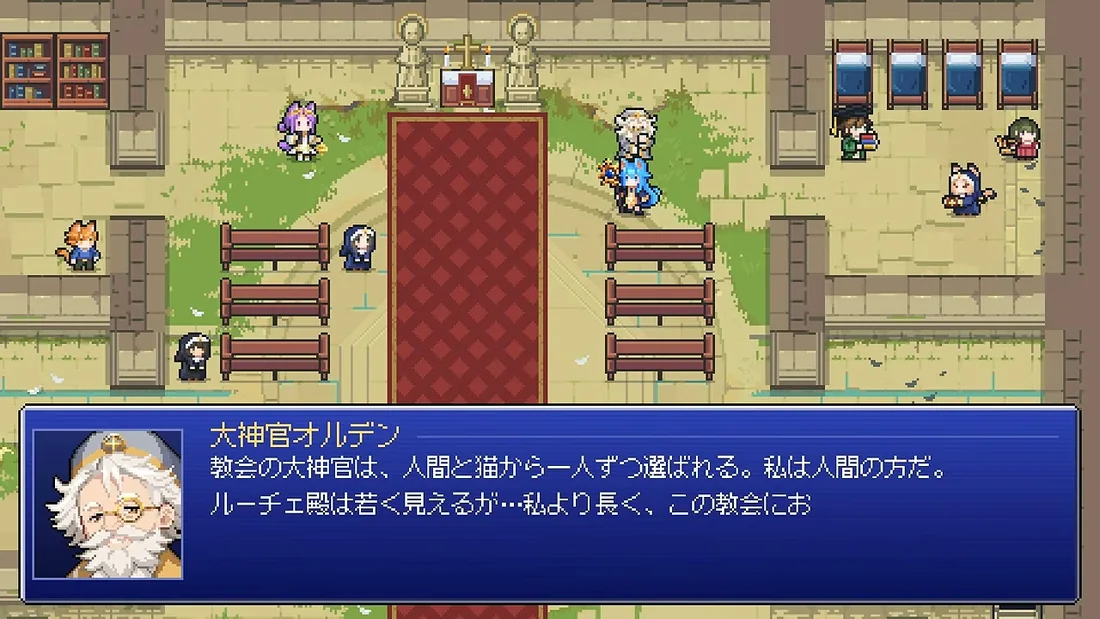
The opening hour is a guided tour: wake up, meet the priest, learn how keywords work, then walk into the first dungeon. Do not rush the church scene. The conversation there introduces Luce, the high priest, and the keyword system that unlocks most optional content later.
Your checklist before the first dungeon:
- Talk to the item shop keeper twice. The second pass adds a line about the forest road and puts a cheap antidote in the stock list.
- Buy 5 healing herbs and 2 antidotes. Early enemies apply poison, and a poisoned party wastes more turns than a dead one.
- Visit the equipment shop and inspect every slot. The shop shows a comparison against what each character has equipped, so you can see who is actually behind.
- Upgrade one weapon, not four. Upgrading spreads your small starting purse thin; one strong attacker clears the first dungeon faster.
- Save at the church before leaving. There is no autosave grace period once the forest path starts.
Sleeping at the inn triggers short party conversations that change as the story advances. They are free character development and occasionally hint at a side path. Sleep once per chapter.
How does the guard timing actually work?
Bosses and some elite enemies spend a turn on a visible wind-up. The text warns that they are preparing something big, and the next turn they hit the whole party. If you keep attacking, you eat the full damage. If you choose Defend, damage drops sharply and the party usually survives even at low HP.
The correct default is to guard unless you are certain the boss dies this turn. A dead boss cancels the attack; a boss at 5% HP does not. If you cannot finish it, guard, heal on the following turn, and resume.
This matters more than levels. A party two levels under the curve can clear a boss with clean guard calls, while an overleveled party that ignores telegraphs will still burn through every herb.
Which habits should you build early?
Rotate weapons before you need to. Proficiency rises through use, and a weapon type you never touch stays at level 1. Give every character a few fights with their secondary option in the first dungeon so the bar is not starting from zero later.
Cast the spell you want to keep. Spell levels are also use-based. If you want a specific elemental spell at level 3 for fusion, cast it on trash fights even when physical attacks would be faster. The weapon proficiency guide→ has the full routine.
Ask about every keyword immediately. Keywords sit in a list until you ask the right person. The game does not mark who knows what, so the reliable method is to exhaust each town's dialogue after every story beat. See the keyword and hidden dungeon guide→ for the ones that lead to real rewards.
Check side paths before boss rooms. Dungeon side branches usually hold a chest, a diary fragment or a shortcut. They are rarely long. The only cost is a few extra fights, which is exactly what your proficiency bars want.
What should you spend money on?
Priority order for the first three hours:
| Priority | Purchase | Why |
|---|---|---|
| 1 | One weapon upgrade for your main damage dealer | Cheap, immediate, and carries the first two dungeons |
| 2 | Healing herbs (5 to 10) | Cheaper per HP than most early healing spells |
| 3 | Antidotes (2 to 3) | Poison is the most common early status |
| 4 | Armor for the character who keeps dying | Fix the weak link before upgrading luxury slots |
| 5 | Nothing else | Save the rest for the second town's better stock |
Do not buy every shiny upgrade in Porta. The second town sells better baseline gear, and the first dungeon's chests cover at least one weapon slot if you explore.
Which companion should you bring first?
Your first pick should cover a role Yuri does not: either physical damage or healing. Akane brings direct pressure, Koro adds ice coverage, Shiro adds light support, and Leo is the close-range exorcist. Any of them can clear the early game, so pick the one whose element matches the dungeon you are about to enter.
If you want the safest possible start, bring a healer and one elemental caster. If you want faster clears, double down on physical damage and carry more herbs. The companion overview→ explains each kit without story spoilers.
What are the common early mistakes?
- Hoarding herbs and dying with 12 in the bag. Use them. The game showers you with money in the second act.
- Ignoring the defend command. It is the single most important button in boss fights.
- Spreading proficiency across every weapon on every character. Pick one primary and one secondary per character.
- Selling old equipment before checking combine recipes. Equipment can be strengthened and combined later, and some early pieces are ingredients.
- Skipping the inn conversations. They are short, free and sometimes point at optional dungeons.
When does the game open up?
After the first dungeon and the forest road, the world map opens and you can choose the order of two early destinations. That is the point where party composition starts to matter and where you should stop reading beginner advice and pick a real plan. Use the walkthrough→ if you want the intended order, or the boss order→ if you only want to know what is next.
FAQ
Can I respec? There is no traditional respec because there are no allocated stat points. Your build is your weapon and spell usage, so you can start training a new option at any time.
Do I lose anything by running from fights? You lose the proficiency and spell XP those fights would have given. The game does not punish escapes with a penalty beyond that.
Is there a difficulty setting? The PS5 release does not expose a difficulty menu in the opening hours. The challenge comes from guard timing and preparation rather than a selector.
How long is the tutorial? Roughly 20 to 30 minutes if you talk to everyone, closer to 10 if you beeline the church.
Sources
Official source: Minimum Studio store pages, official site and world lore, plus the PlayStation Store listing for version and rating details. Screenshot values are from the official gameplay footage.
Official source: Catgirl Fantasy official site ↗ Official source: PlayStation Store listing ↗ Community source: PS5 trophy list ↗